
Pictorial Punch: Treasures from the Archive

A Retrospective
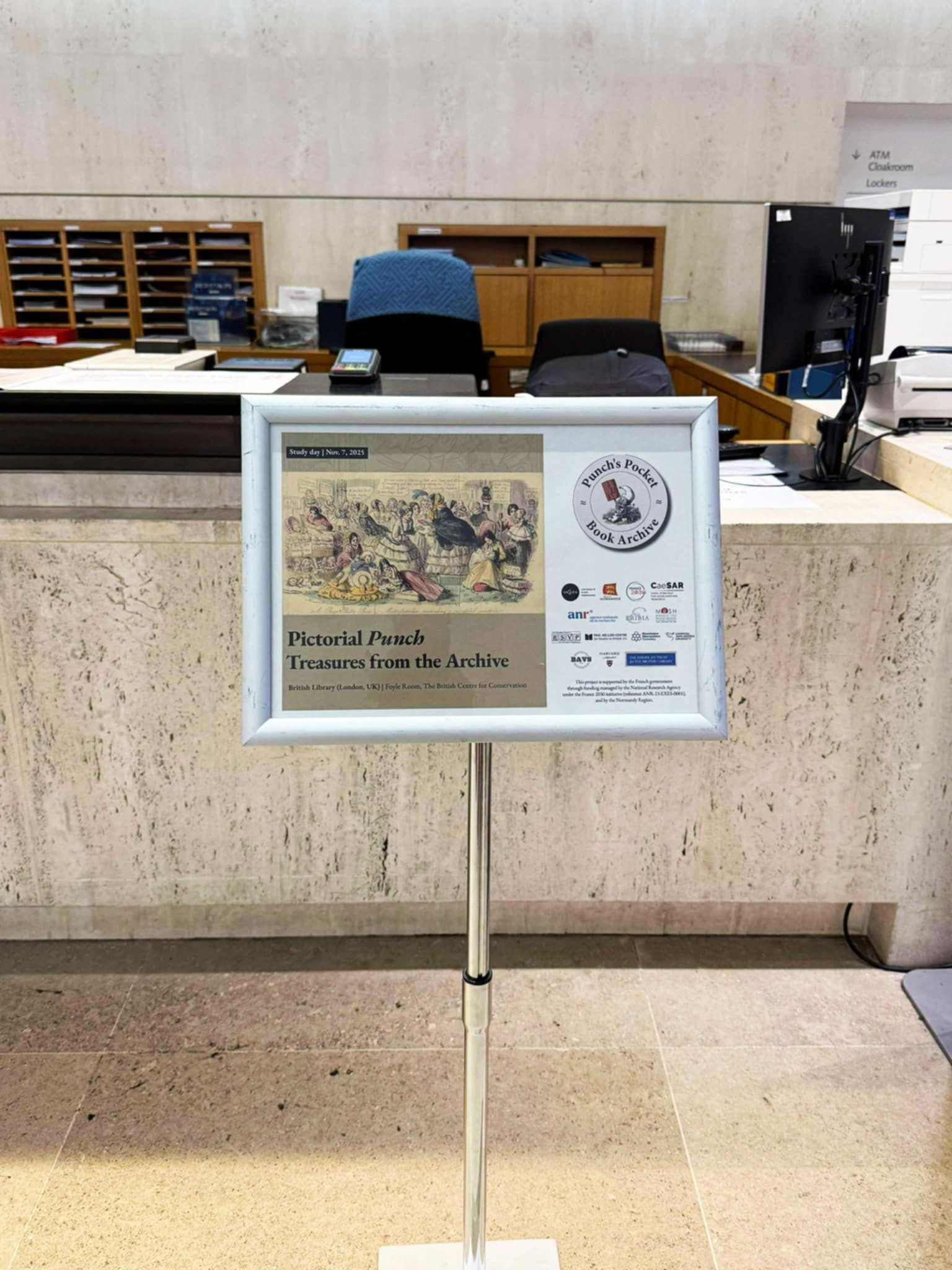
The Punch’s Pocket Book Archive team (Françoise Baillet [PI], Clare Horrocks, Sonja Lawrenson, Bethany Qualls, Julia Roger, and Subha-Sree Pasupathy) hosted a study day at the British Library on 7 November 2025 and share the following retrospective on the day’s activities.
The aim of the event was to take a fresh look at Punch’s visual art through the lens of the Punch Archive, an extensive collection acquired by the British Library in 2004. Constituted of three sub-fonds — the records of Punch; the financial archive of Bradbury and Evans, and Bradbury, Agnew and Co.; and the papers of Richard Geoffrey G. Price— the Punch Archive includes notebooks, diaries, and correspondence, as well as hundreds of original preparatory drawings and proofs by Punch artists, most of which remain to this day unknown to the academic community and the wider public.
In line with Punch’s Pocket Book Archive, an international digitisation project which proposes to deliver an open-access database based on a full run of Punch’s Pocket Book (1843-1881), “Pictorial Punch – Treasures from the Archive” engaged with both material and digital sources. The conference brought together a wide range of reputed experts and early career researchers, all of whom shared insights on the present and future of Punch scholarship.
A Few Highlights from the Study Day




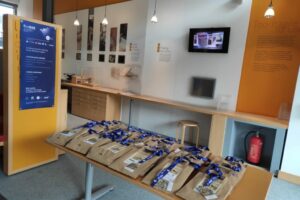
A Summary of the Day’s Sessions
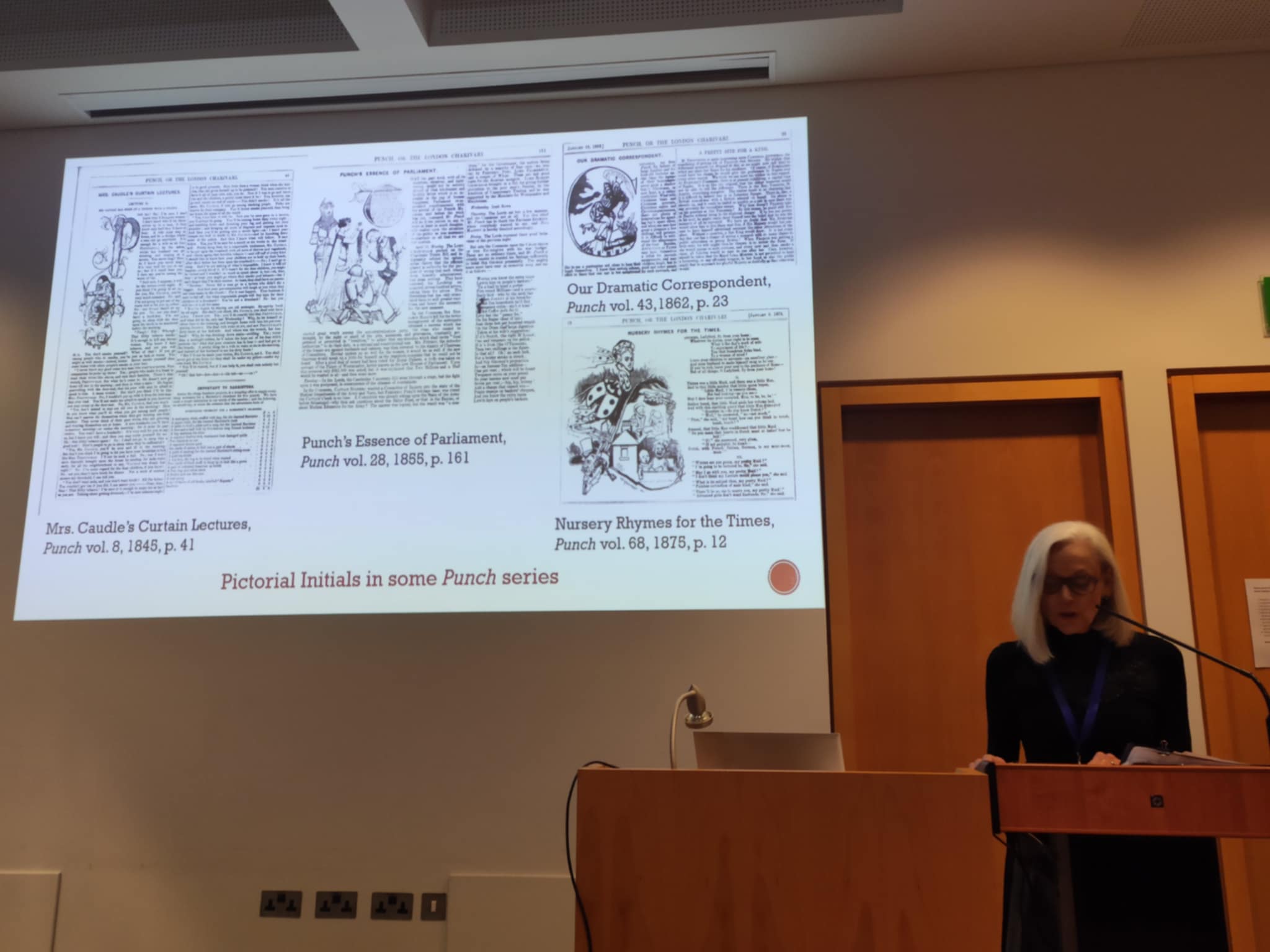
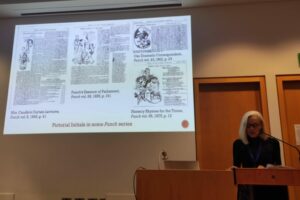
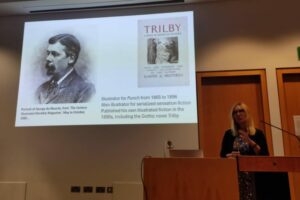
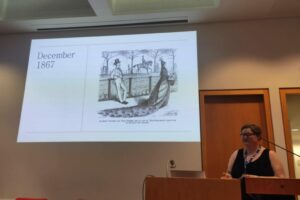
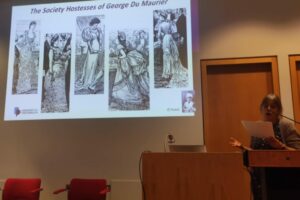
After a word of welcome by Alice Zamboni, Curator of Modern Archives and Manuscripts, 1601-1950, and Françoise Baillet, Principal Investigator of Punch’s Pocket Book Archive project, Session 1 focused on the codes, conventions and cultural implications of Punch’s imagery. In her talk entitled “Reading Pictorial Initials in Punch, 1841-1891,” Lorraine Janzen Kooistra (Toronto Metropolitan U.) drew attention to the specificity of bi-medial reading in Punch, illuminating how the magazine’s ornamental initial letters appeal to the reader’s ability to connect text and image. Anne Anderson (Society of Antiquaries of London) then deconstructed Punch’s anti-aesthetic crusade, focusing on a series of cartoons from the 1860s and the 1870s. In “‘Now Ladies if you Please’: George du Maurier’s Visualisations of Mid-Victorian Femininity in Punch and Illustrated Editions of Elizabeth Gaskell’s 1860s Sensation Fiction,” Emma Liggins (Manchester Metropolitan U.) showed how instrumental the engraved line was in the circulation of prescriptive visions of the female body.
First Keynote by Patrick Leary

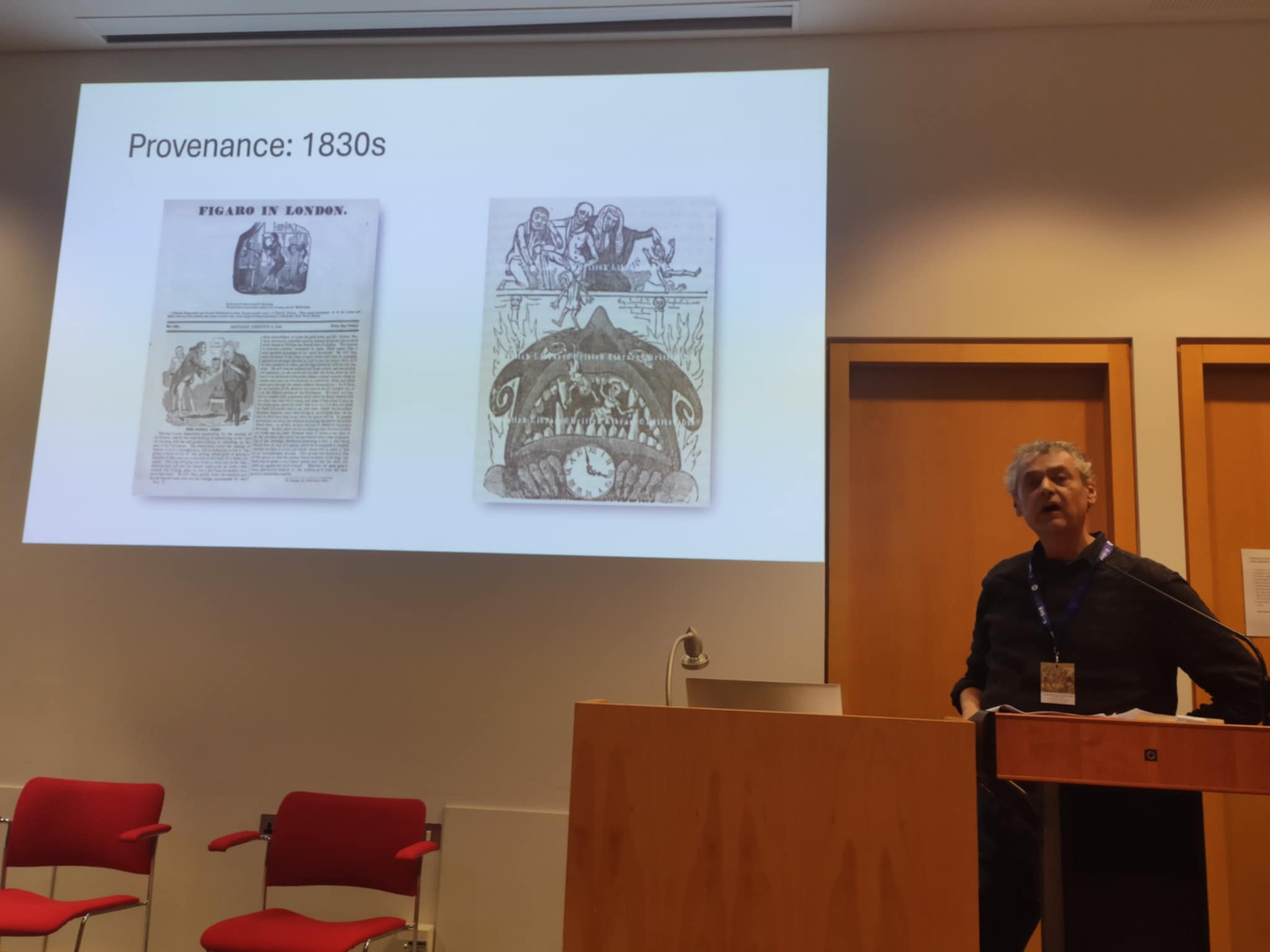
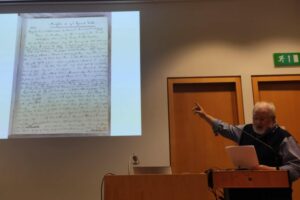
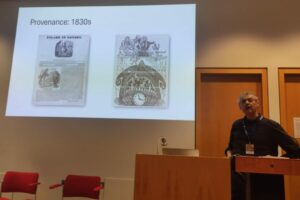
Patrick Leary’s keynote talk on “The Education of Henry Silver” was based on his forthcoming annotated transcription of “Nights at the Round Table,” Henry Silver’s diary-style report on the Sunday dinner meetings of the staff and proprietors of Punch. A renowned historian of the Victorian press and author of The Punch Brotherhood: Table Talk and Print Culture in Mid-Victorian London (British Library, 2010), Patrick Leary took us on an enlightening tour of the casual conversations held around the mid-Victorian Punch table. Quoting Silver’s verbatim of the back-and-forth exchanges, he convincingly showed how ephemeral talk shaped the magazine’s visual offer, from its famous “Big cut” to its ancillary products like the Almanack or the Pocket Book. Such traces, Leary explained, testify to the competitive and collaborative production process of Punch’s black-and-white art. “Now and then,” he concluded, “we come across a source that shines a light that enables us to glimpse some of those processes at work, and that is Silver’s diary.”
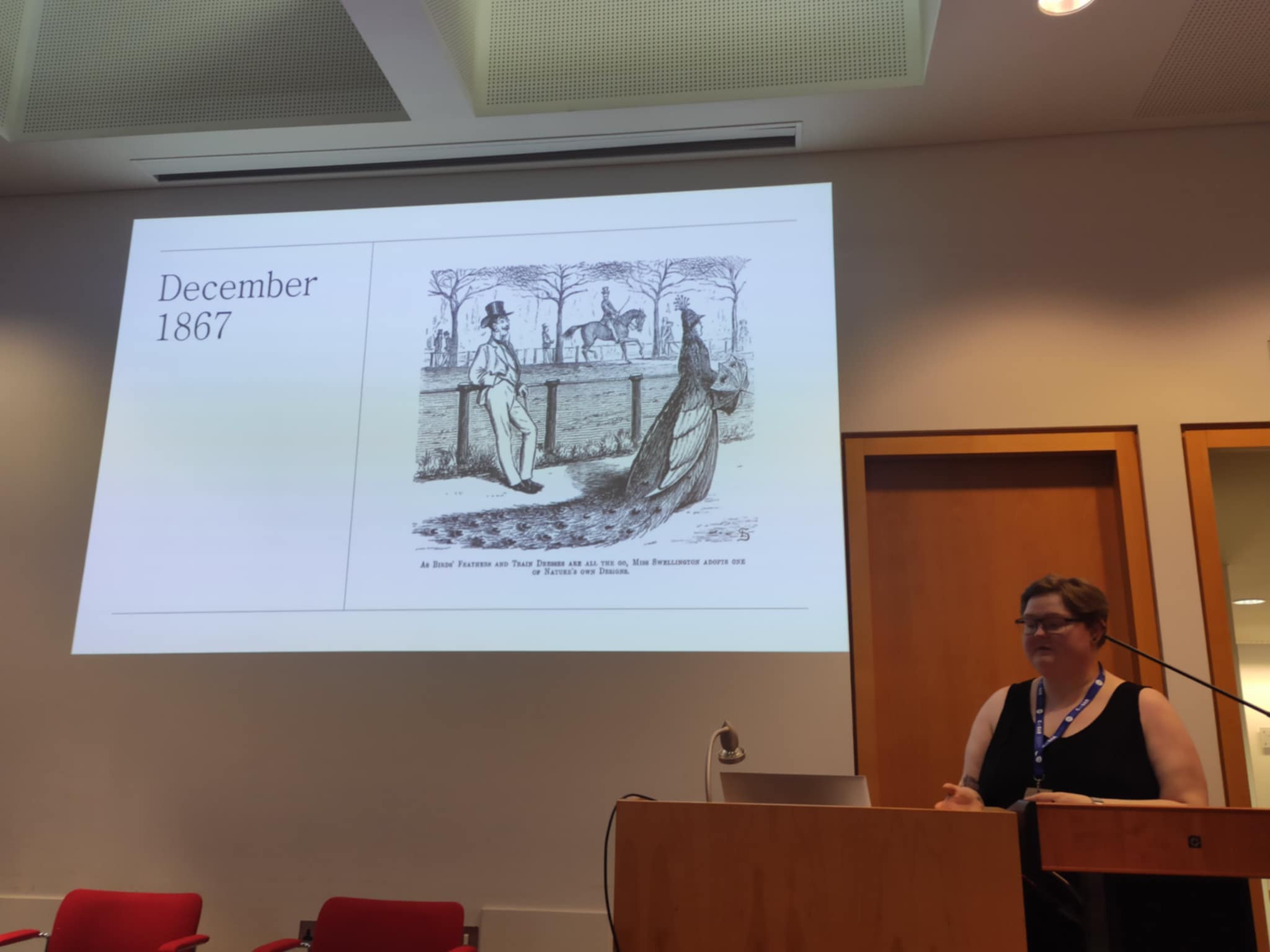
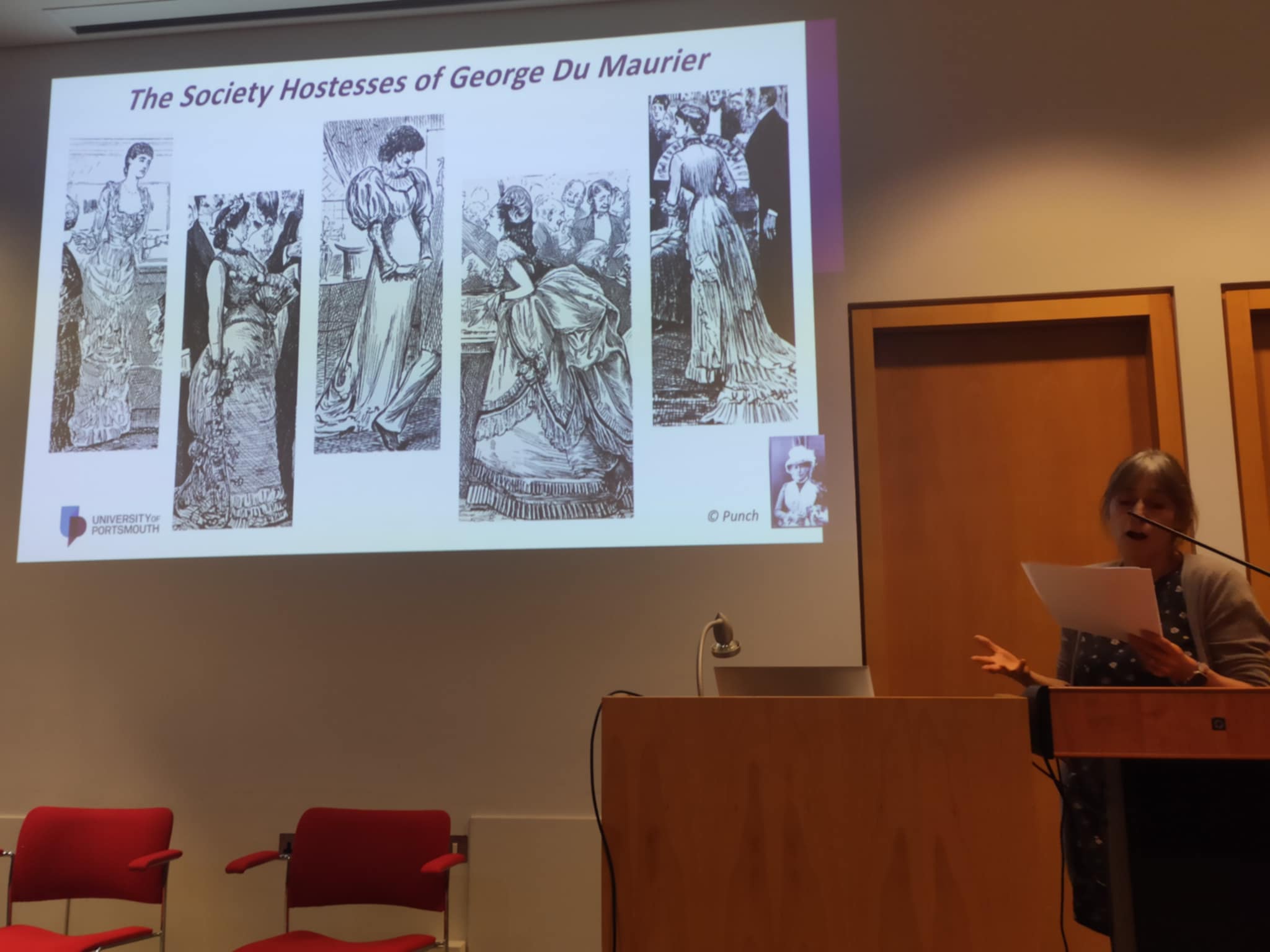
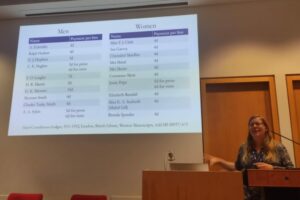
Bethany Dahlstrom (Independent) opened Session 2 with a paper entitled “‘[E]ndless Holocausts of Small Fowl’: Mr Punch’s Designs After Nature.” Focusing on Linley Sambourne’s representations of female fashion, Dahlstrom shed light on the transformations and transmutations at work in these pictures. Sambourne was also the subject of the next paper, in which Clare Horrocks (Liverpool John Moores U.) approached the artist’s creative process through his illustrations and personal correspondence, today kept at the Sambourne House and Leighton House museums. Jane Harrison (U. of Portsmouth) then evoked the ‘Lion Huntress of Belgravia’, that stereotypical rendition of the Victorian society hostess as seen by Punch.
Second Keynote by Julia Thomas
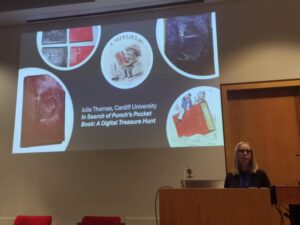
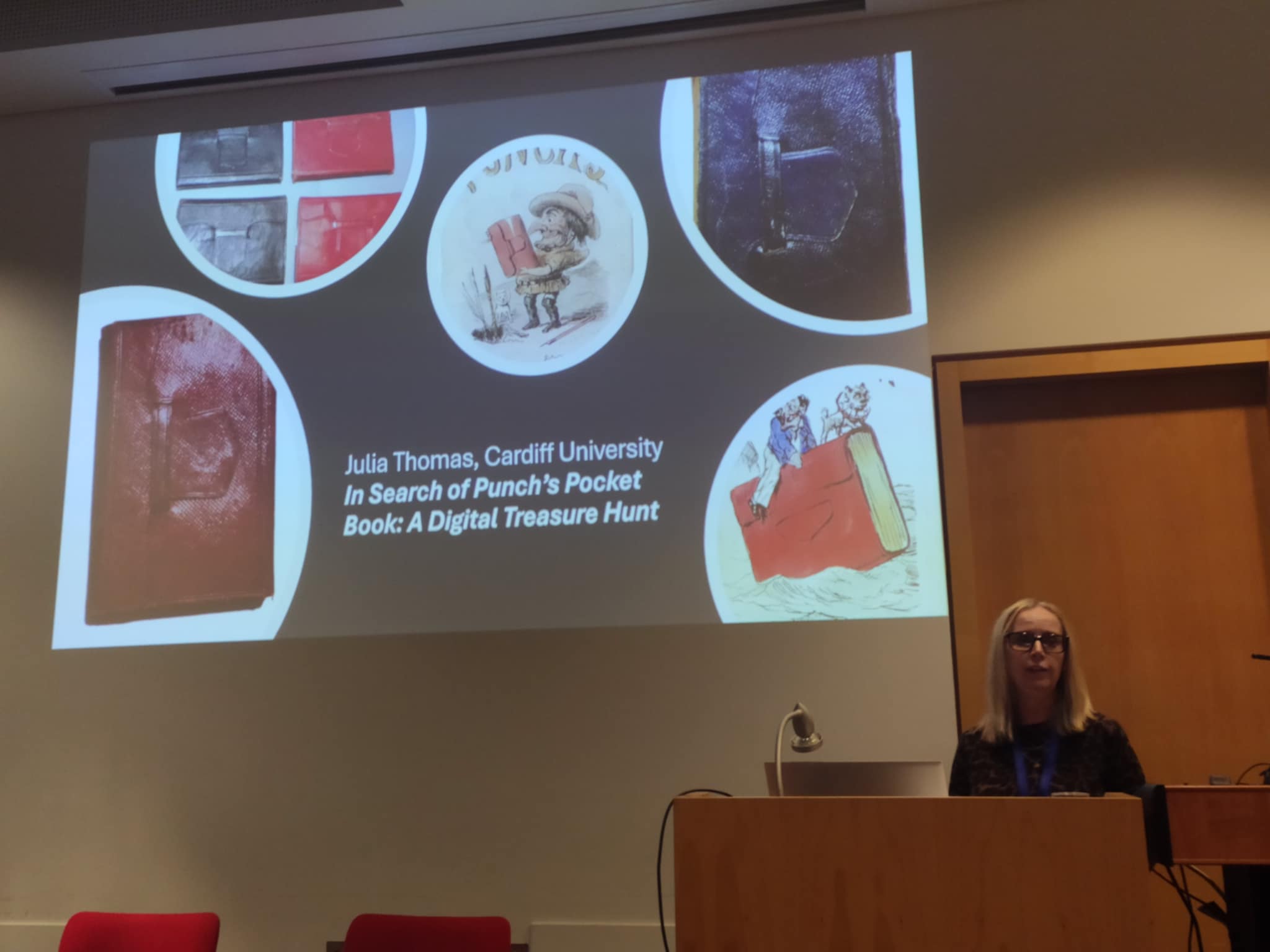
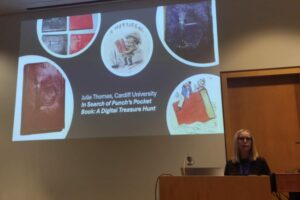
A high-profile expert on Victorian material and digital culture, Julia Thomas (Cardiff U.) presented the second keynote of the day. Entitled “In Search of Punch’s Pocket Book: A Digital Treasure Hunt,” this enriching presentation opened with an overview of the history of digital processes, as applied to nineteenth-century illustration. Keywording, Julia Thomas remarked, has fundamentally altered our understanding of Victorian images, allowing researchers to notice hitherto unsuspected formal and thematic similarities between them. As Principal Investigator of the AHRC/NEH-funded Finding A Place: A Research Project to Advance Digital Methods and Unlock the Use of Digitized Book Illustrations in Cultural Institutions, Thomas then presented the concept of ‘caption capture,’ which consists in identifying captions in illustrations, so that these images can be searched through the text they contain.
Pushing further her line of reasoning, Thomas then remarked that the visibility of illustration—material and digital—generates ‘cognitive networks,’ that is mental databanks produced in the minds of readers. At a time when AI creates new perspectives, but also new challenges, what matters, Thomas concluded, is not the result of such remediations, but the digital journeys that they entail.
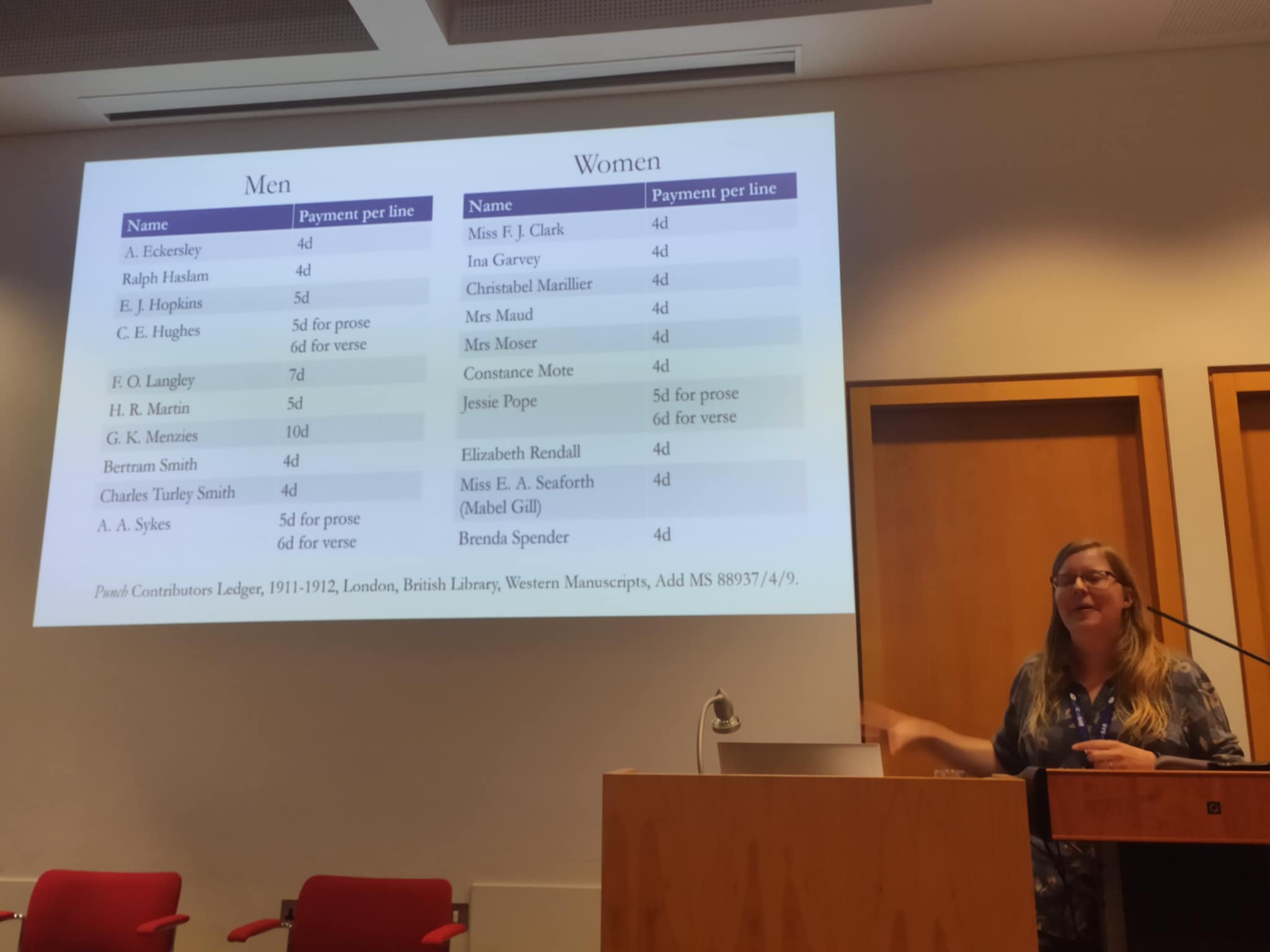
Our last panel of the day, Session 3, took us to the heart of Fleet Street. Christopher Gangadin Anderson (Independent) retraced the ups and downs of Henry Mayhew’s collaboration with the Punch team, which he left in 1846. Elliot Andrews’s “A Wretched Arithmetician: John Leech and the Etiquette of Money in the Punch Brotherhood” then ventured behind the scenes of the Bradbury & Evans publishing house, offering us a glimpse of the financial difficulties experienced by some nineteenth-century graphic artists. Last but not least, Katy Birch’s study of female Punch writers reminded us of the need to shed more light on many unacknowledged Punch contributors.
Conclusions and Perspectives
Speakers and audience expressed their enjoyment of the event, and particularly appreciated the opportunity it gave them to keep up with innovative research on the subject. Contacts have been established between early career researchers and established Punch scholars, heralding exciting new research ventures.
Punch’s Pocket Book Archive’s informal collaboration with the British Library will continue in the second phase of the project, with a four-case Treasures Gallery “Punch and Print” exhibition slated for the summer of 2027.
Editor’s note: For full disclosure, the Punch’s Pocket Book Archive project has been supported in part by RSVP’s Leary Resource Development Grant (2024), made possible by the bequest of the Eileen Curran estate.
